How to get your pub in the CAMRA Good Beer Guide - with beer expert Nick Collins
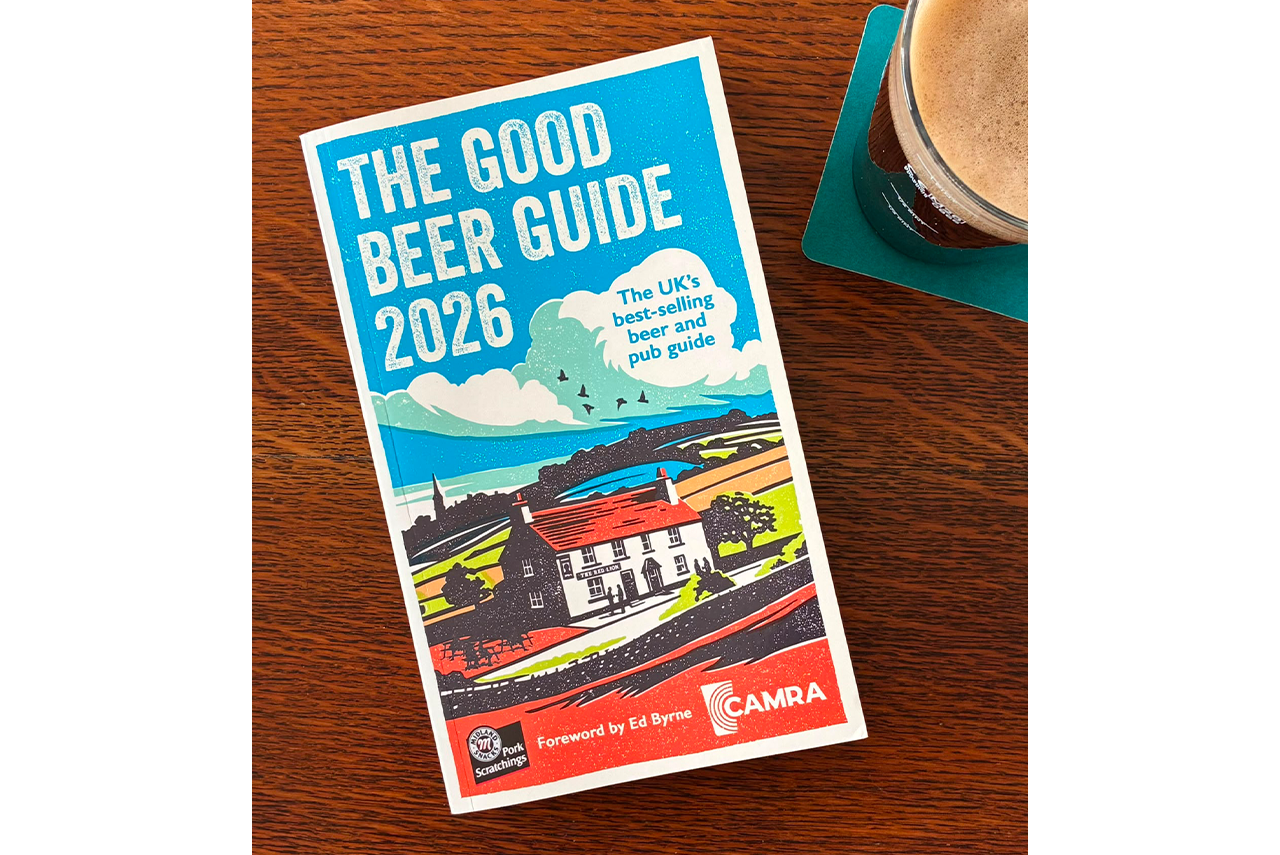
The Campaign for Real Ale (CAMRA) Good Beer Guide is, to many people, the bible of beer. To appear in its hallowed pages is the holy grail for pubs where hand-pulled cask ale is a serious business. Being selected officially puts your pub on the real ale map. The effects can be transformative, as you become a certified destination for over 140,000 CAMRA members, and a trusted venue for locals who appreciate a proper pint in a good pub.
Getting in is not easy. Only 4,500 pubs (10% of all the watering holes in the UK) make the cut.
So, to make sure we give you the best advice on how to get in, we’ve sought out someone who truly knows what it takes.
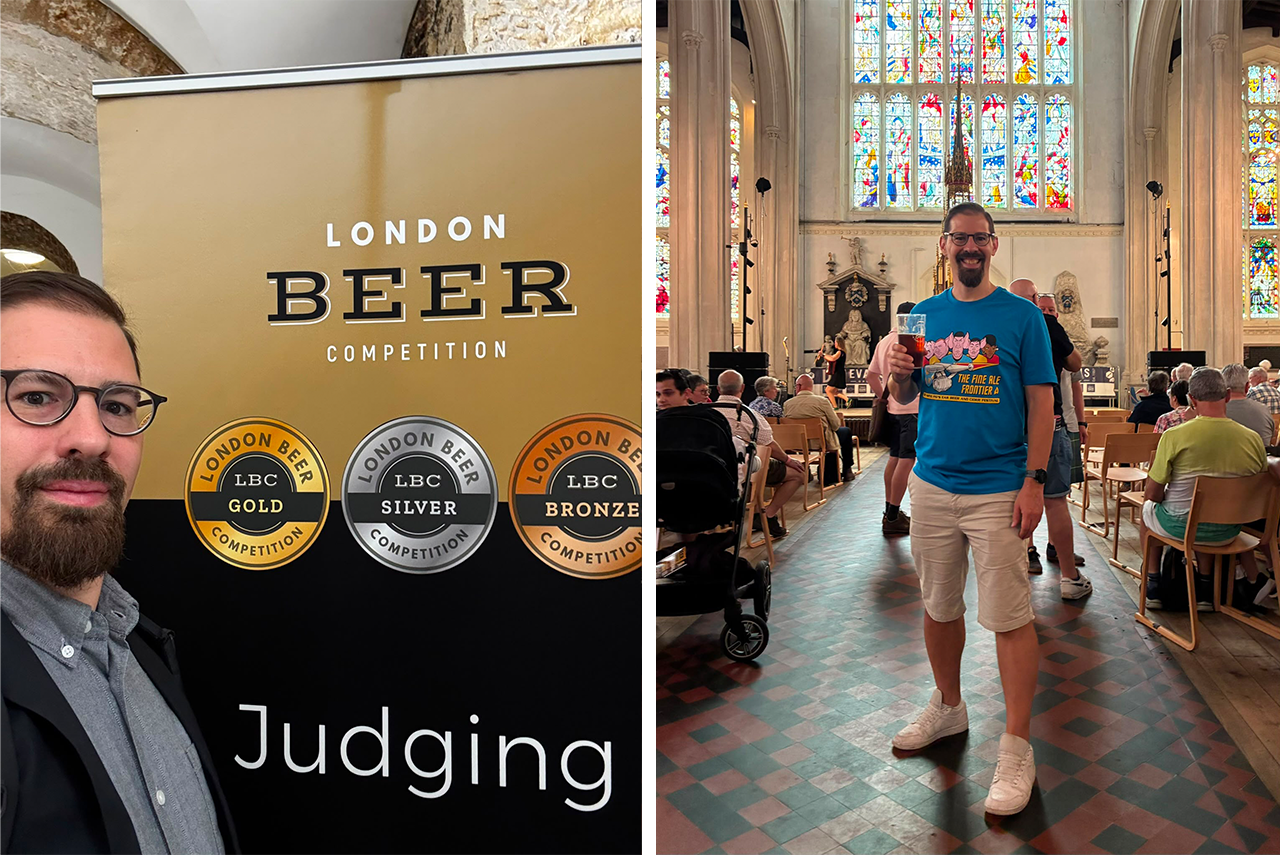
Nick Collins knows beer. He’s been a CAMRA member with the East London & City branch for over twenty years, serving as a buyer for their Pig’s Ear beer festival. He’s judged at BeerX and the London Beer Competition. He’s a member of the British Guild of Beer Writers, and thousands of people have tuned in to the insights he shares online as the
@hackneyhophunter. He’s also a Certified Cicerone® (the beer equivalent of a sommelier), and spends plenty of time surveying pubs for the CAMRA Good Beer Guide. So it’s safe to say he’s the right person to speak to if you’re looking to get your pub into the next edition.
He shared his insights into the selection process and what you can do to increase your pub’s chances of making the
Good Beer Guide (GBG to those in the know).
What makes the Good Beer Guide special?
Nick says, “So the thing that makes the GBG unique is you can't apply to be in it. Each local CAMRA branch is responsible for nominating pubs, and, depending on size, each branch has a quota of pubs it can put in.”
Since selection is purely democratic, it’s an extremely credible and trustworthy source of proof that your beer is outstanding. Better still, you don’t pay to enter, so
an entry in the Guide is an exceptionally powerful form of free advertising.
How CAMRA beer scoring works
The first step to getting into the GBG is achieving consistently high scores for beer quality across the year. CAMRA members submit scores on the CAMRA website for beers they’ve tried. Nick says, “The scoring relates solely to the quality of the beer, its condition and how well it’s kept, rather than the drinker’s personal tastes.”
That said, it’s still worth offering a good range of styles to appeal to different tastes. Members are more likely to score your beer if there’s something they enjoy on the bar.
The National Beer Scoring System (NBSS)
On June 1st 2026, CAMRA updated its beer scoring system. Previously, members would rate a beer from 1-5, with a zero score for any pubs that didn’t stock cask beer. However, the new system includes descriptors for each level, making it easier for members to understand how to score each beer.
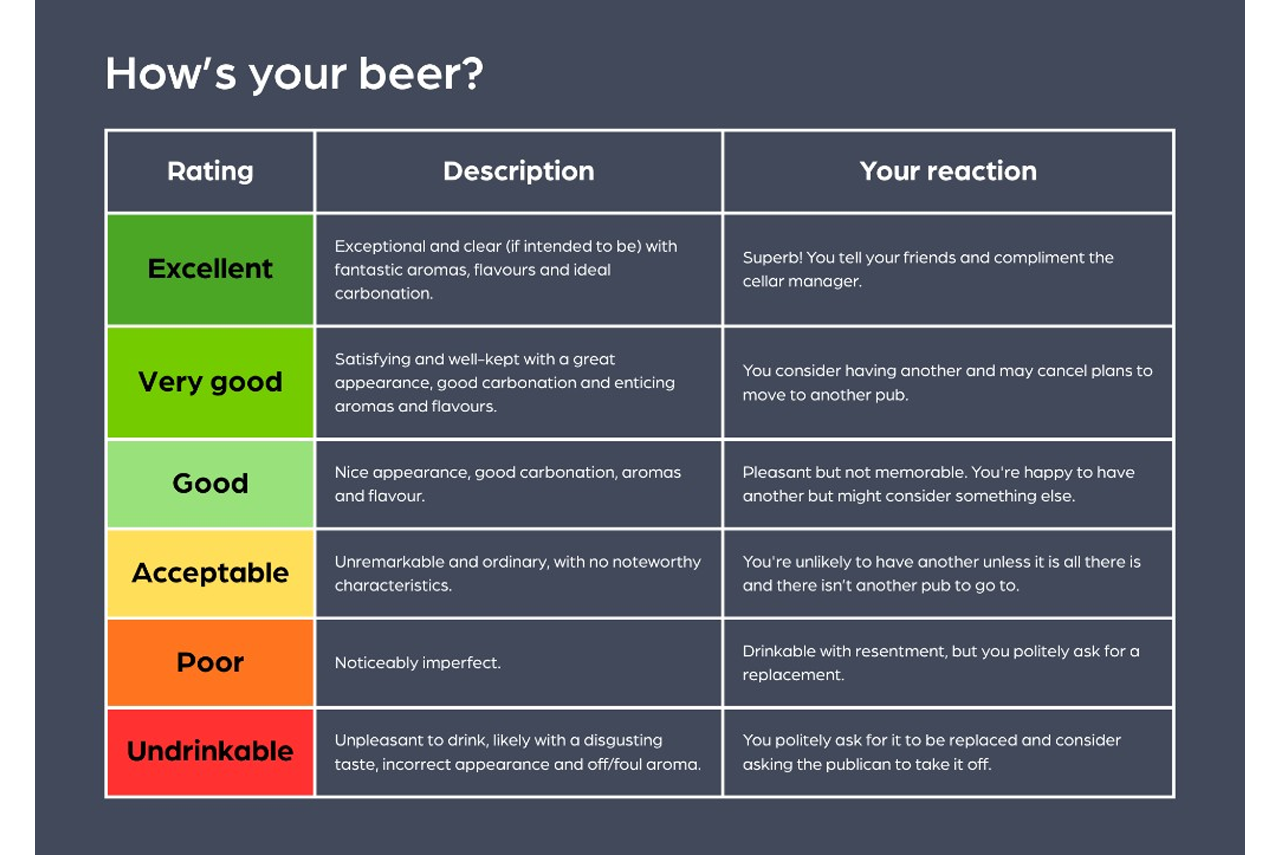
Each CAMRA branch has its own minimum requirements for a pub to become eligible for the Guide. Under the old system, many required a pub to achieve an average score above 3, 3.25, or 3.5, depending on the branch. With the new descriptive system, venues would need an average rating of ‘Good’ at the very least across the whole year.
Many branches have measures in place to ensure scores reflect consistency across the year. For example, the
West Dorset branch requires urban pubs to have scores from 10 different days visited, from 10 different reviewers (for rural pubs, it’s scores from 6 different days visited, from 6 different reviewers).
Volume of reviews can also be a factor. Some branches use a CAMRA-approved formula that lends weight to venues with a higher number of scores and individual scorers.
So the more members you can get scoring your beer, the better.
How to encourage CAMRA members to score your beer
You might have the best-kept beer in the world, but you can only make the Guide if you get those scores on the board. Here’s how you can encourage CAMRA members to do so.
CAMRA discounts
One strategy many pubs turn to is discounts. Nick says, “Discounts are by no means obligatory, but they can be a good way to quickly attract CAMRA members, particularly if your pub hasn’t historically been popular with members or is new to cask beer. And it’s a very simple thing for staff to ask any member who asks for a discount to score their beer.”
What sort of discounts work? “The typical discount across London is 10%. Some pubs offer up to 15% (such as Ye Olde Mitre), but that's rare. The other end of the spectrum is a fixed amount, usually 20-30p, off a pint. Obviously, this only applies to cask beer.
However you do it, make sure it works for your margins. You might want to offer a discount on quieter days only, when the extra trade really benefits you.”
In-venue signage and technology
If you don’t ask, you don’t get. Nick says, “There’s nothing wrong with putting a few reminders to score your beer around your pub. The closer to your pumps, the better. If you have a spare pump clip, why not attach a little sign prompting members to score the beer?”
Nick feels pubs could utilise technology a bit more. “You can
make it as easy as possible for members to access the CAMRA website by displaying QR codes that take them there directly. Again, this can be attached as a pump clip, or a small sign on the bar near the pumps.”
PR and relationship-building
It’s important to ‘stay on the radar’ of your local branch. Many branches send communications to their members via magazines, email newsletters, and social media.
Nick says, “The London branches collaborate to produce the London Drinker magazine, which goes out to around 1,200 independent pubs, plus all London Wetherspoons and over 100 Fuller’s pubs. Placing an ad promoting your venue (plus any CAMRA discounts if applicable) is
a fast way to make your pub known to thousands of beer lovers. Check your local branches to see if they run a magazine.”
However, it doesn’t need to be anything too formal. Simply let your local branch know whenever you do a beer-led event and invite members along. Each branch differs in how they prefer to communicate. Some are more active on social media, while others might prefer email.
Nick also recommends letting your local branch use your venue as a base. “You can offer to host their events, such as beer festivals. They have regular meetings (ranging from monthly to quarterly), and are always on the lookout for interesting places to hold them. You can also offer to be a stop-off on their social pub crawls.”
As a publican, there’s nothing to stop you from joining CAMRA. It’s just £35 for the year, and gives you access to all the meetings and festivals – a great way to build relationships and keep in touch with what’s going on.
Staff training
CAMRA members are by definition beer enthusiasts. So it’s likely that many of them will want to chat with your staff about the beers they’re supping. If it’s a guest beer from a brewery they haven’t heard of, they may ask about that. They might ask how long it's been since the barrel was tapped, or what type of hops were used to brew it. So it helps if your staff have the knowledge to engage in these conversations.
Not only will this provide a better service and help you sell more beer, but it’ll also encourage members to score the beer. And when it comes to voting on which pubs make the Guide, if your pub does happen to be neck and neck, that little chat with your enlightened bar staff might be what sways a voting member to your side.
Nick recommends taking staff training a step further: “It’s worth putting some of your staff through the
Cicerone Certification Programme so they become a ‘Certified Beer Server’, which is level 1 of the programme.” It costs around £60-£65 per person – a modest investment against the potential increase in beer sales.
How CAMRA members decide who makes the Guide
A high number of consistently good scores does not necessarily guarantee selection. While the top-rated pubs in each sub-section of a branch’s area might be automatically allocated slots in the Guide, the remaining slots are filled via a democratic process at selection meetings. According to Nick, “The first meeting normally happens around January. Typically, this involves identifying any anomalies such as a surge in scores from a particular period, or other news such as any pubs that have changed management.”
“After this meeting, branch members will go out and resurvey all the eligible pubs. They’ll also use this as a bit of a scouting mission to gather information to accompany the Guide entry. Things like the pub’s history and character, the number of beer pumps available, and any regular events it hosts. So, if you spot a CAMRA member in your pub in January or February, and they’re asking you or your staff probing questions, that’s usually an indication you’re in consideration for the Guide.”
“Then branch members reconvene for a second meeting around February, where the serious debate happens. Beer quality always takes precedence when it comes to which pubs make the final cut. But if two pubs are genuinely neck and neck on beer, other factors such as character, architecture, history, food, service and atmosphere can come into play.”
Do other CAMRA awards play a part?
Each CAMRA branch also gives out annual awards, and many also do seasonal awards. While these are separate from the GBG, they do overlap. Winning one of these awards can increase your chances of making the GBG, since you'll attract more members, which of course means more scores.
Pub of the Year
The main award is the Pub of the Year. The criteria for this award are wider than those for the GBG. The Lincoln branch’s guidelines cover aspects such as staff knowledge, the pub's style and decor, and community focus, though the primary factor is still beer quality. In some branches, such as the Colchester and Northeast Essex branch, winners, runners-up, and highly commended pubs in the Pub of the Year award automatically gain entry to that year’s GBG.
However, this isn't the case for every branch. Nick says, “In the East London & City branch, members nominate pubs for Pub of the Year. The pubs with the most votes are cross-referenced against GBG eligibility, and then a short list is sent out to all branch members for voting.”
Check your local branch’s GBG eligibility info to see whether its award-winning pubs automatically qualify.
Pub of the Season
If your local CAMRA branch does Pub of the Season awards, winning can be a great way to boost footfall, and in some branches, seasonal winners are guaranteed to be considered for the GBG. Many branches, such as the Halifax and Calderdale CAMRA branch, use this award as a way to recognise pubs that have recently improved their real ale offering, so it can be a stepping stone to the GBG.
Why might you be ineligible for the CAMRA Good Beer Guide?
Certain rules and regulations can mean your pub is ineligible for the Guide, even if your beer is flawless.
The first relates to CAMRA’s rules around changes of management. These are in place to ensure confidence in continued beer quality.
According to Nick, “Branches might exclude a pub if it’s for sale or a change of landlord/lady is expected within 6 months to a year after the selection period. New pubs, or those reopening after a long period of closure, are usually required to be open for at least 6-12 months prior to selection, to allow CAMRA members to gather sufficient data on the beer quality.”
However, Nick says exceptions can be made.
“If the incoming landlord/lady has a strong track record of running pubs in the Guide, or has switched from a pub already in the Guide, CAMRA members can be sure that they will maintain the required standard, and may still consider them.”
It can also come down to simple geography. One of the main aims of the GBG is to ensure that beer-lovers can always find somewhere guaranteed to offer a great pint wherever they are in the country. Therefore, each branch is allocated a set number of pubs to submit to the Guide, based on the area’s population, number of pubs, and the extent to which it’s a tourist destination. For example, in the 2026 GBG, East London & City has 44 pubs, while Colchester and Northeast Essex has 18.
Nick explains that, “This can mean that a pub can maintain exceptionally high standards of beer, but not make the guide because all the slots have been filled for that area. No pub will ever get included in the Guide based on postcode alone if they don’t meet the standard, but a good pub might get the nod over one with similar scores if it’s in an area without one.”
How do you know if you’re going to be in the Good Beer Guide?
As we’ve mentioned, you might get a sense that you’re under consideration for the GBG if you notice CAMRA members poking around in January. But Nick says, “Pubs are not usually told far in advance that they are in the guide, and there’s no digital notification. Each selected pub will receive a POS kit that includes posters and stickers. Kits are hand-delivered by CAMRA members, and pubs may get them a week or so before the book is out. However, you’re not allowed to use the POS materials until the day the guide is released.”
Could your pub be the next pin on the real ale map?
You may already be doing everything you need to do to make the GBG. Your beer is outstanding, your cellarmanship impeccable, your pouring perfect. The next step is to stand out in the eyes of CAMRA members whose votes determine which pubs make the cut. The insights and strategies we’ve shared here will help you do just that.
At Tabology, we love nothing more than a good pub. In fact, we actually own one, and it’s where we developed and refined our
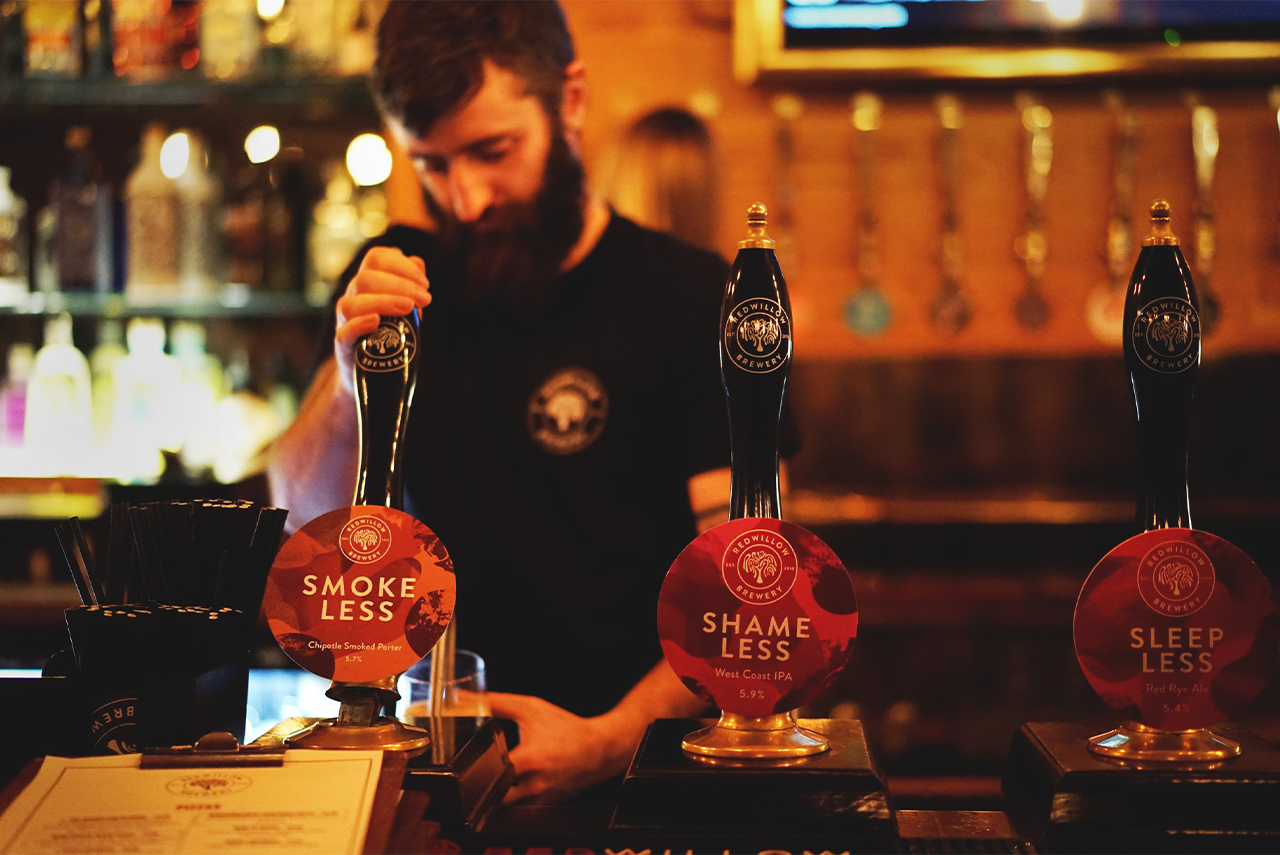
Pub & Bar EPOS system. That means it’s been built around the day-to-day realities of running a pub. GBG stalwarts such as the Mardale Inn, RedWillow Brewery, and Blind Jack’s (the Morning Advertiser’s Beer Pub of the Year 2025) all use its pub-focused tools to manage cellar stock, track beer sales in detail, and pull in beer info via the Untappd integration.
While we can’t promise it’ll get you into the GBG, it can certainly make your life easier. If you’re interested,
drop our team a line.
Finally, don’t forget to follow Nick for more nuggets of beer wisdom on his Instagram page, the
Hackney Hop Hunter.