How to control stock in a restaurant or bar with stock management software
How to control stock in a restaurant or bar with stock management software
If stock control isn't your favourite management task, you're not alone. For many operators, stock control is fragmented and frustrating. And this is a problem. UK venues create £628 million worth of food waste every year (according to Business Waste UK), while The Drinks Business estimates the hospitality industry loses over £200 million in beer waste alone. With operating costs spiralling and customers demanding more, good stock control is one of the fastest routes to better margins and fewer wasted hours
This is where the right tech comes in. Integrated stock management software gives you real-time data, and enables smarter stocktaking and ordering processes. It not only transforms how you work by slashing the hours it takes to carry out those monthly, weekly and daily tasks, but it also transforms how you feel when you look at the your books at the end of each month.
With that in mind, let’s look at why stock management is so critical to your venue's success, some best practices, and how the right tech makes it possible.
How does stock management software save time in hospitality?
Let's start with the bigger picture. The less time you (and/or your managers) spend on stock management tasks, the more time you have to oversee Front of House, support team members, interact with customers and do your job more effectively.
Feedback from our users suggests streamlining the ordering process can save up to 2 hours a week – and that’s just one element of stock control. Factor in time savings in other tasks such as stocktakes, price updates, automated ordering, and waste management, and those saved hours can really add up. When considering the labour costs saved in management hours, that can translate to hundreds of pounds saved every month.
Further time savings come when your stock control is fully integrated with your POS system, rather than separate platforms, as data flows seamlessly within the unified system.
Now let's get into the ways tech can optimise your stock management and increase your Gross Profit (GP)...
How can automated ordering reduce waste and boost cash flow?
Business Waste UK estimates that 10% of food bought by venues never reaches customers, and 6% of total sales are lost through food waste.
Most food waste stems from over-ordering – either through panic buying when items run out, incorrect weighing and measuring, or simply not understanding your customers’ buying patterns. With robust systems in place, you find out about these issues before it's too late. You know exactly where your stock is going, and reduce waste and spoilage by ordering the right amounts.
This applies to your wet stock (drinks) too. A stuffed cellar means your money is tied up in too many barrels and bottles, and can’t be used for other essential outgoings such as paying staff.
Demand forecasting helps you maintain ideal stock levels. With smart systems such as ours, you can
set up 'low stock' notifications so you'll receive email alerts when a product or ingredient is running low, and only order when you really need to. Our
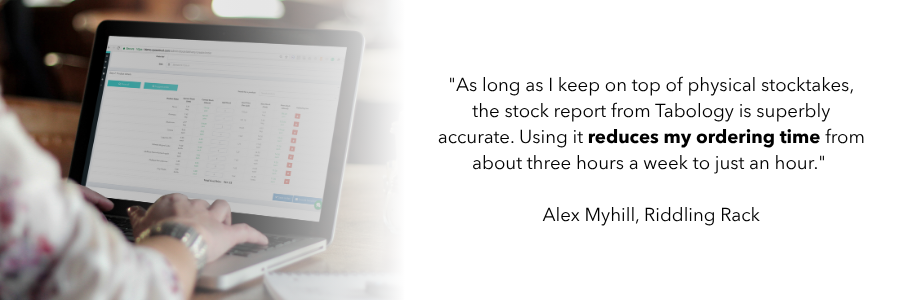
Suggested orders function uses your sales data since your last order, your current level of stock and your preset minimum stock levels to suggest order quantities that see you through to the next order. Whichever method you choose, you get
accurate
orders in a single click.
How do you control food costs and maximise gross profit?
BDO's Restaurant & Bars Report 2025 states: 'Rising food costs mean restaurants will need to be even more vigilant in tracking and monitoring costs.'
Gross profit is one of the most important metrics for profitability. But without real-time data on ingredient costs, portion usage, and waste patterns, you're flying blind on a major factor. Even a small drop in costs (2-5%) can equal thousands added to your annual gross profit.
One way to reduce your food costs is to tighten up your portion sizes so you need to buy less. Environmental NGO, WRAP, estimates 15% of main courses get left uneaten, with 48% of diners reporting excessive portion sizes as their reason for leaving food. If you notice a lot of leftovers being brought to the potwash, keep track of which products or ingredients are left most often. Then you can test reducing portion sizes gradually while monitoring customer feedback.
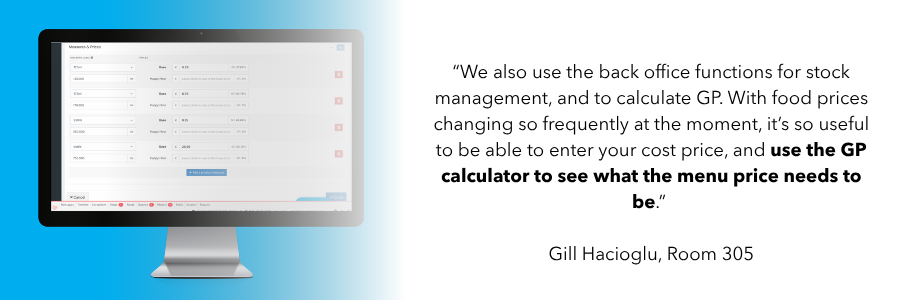
With detailed recipe costing and batch management tools like those in our system, you can edit ingredient amounts and portion sizes precisely and see exactly how much your GP increases with slight adjustments. This data-driven approach prevents the guesswork that often leads to over-portioning and unnecessary waste. It also works really well for cocktails.
As all operators know, supplier costs can fluctuate quickly and significantly. Supplier management tools let you track costs and adapt quickly to these changes. The bulk price update function in our system lets you edit prices for any selected products in minutes, giving you automatic GP% calculations as you edit.
Tech makes it so much easier to get a crystal clear understanding of your costs, so you can reduce them and maximise profits.
How do stock and sales data help you engineer a profitable menu?
BDO's Restaurant & Bars Report 2025 notes: "A well-optimised menu is the secret ingredient to minimising food waste."
It highlights menu engineering as a key lever for cutting waste and improving profitability, identifying which dishes are both popular and margin-positive - and which are not.
The most successful venues use reporting and analytics to inform menu decisions, promotional strategies, and pricing adjustments. You want a feedback loop between what you buy, what you sell, and what drives profit. According to an article by Menu Cover Depot this ‘menu engineering’ can increase profits by as much as 10-15% (it also has a useful matrix to help you classify your menu items).
Armed with integrated data from effective stock control software, you can highlight your most profitable dishes and optimise your offerings – while avoiding overwhelming customers with too many options that don’t make you money.
How often should restaurants and bars do a stocktake?
Stocktakes are one of the most effective ways to use your hospitality EPOS to track stock. But let's be honest – no technology can completely eliminate the human work in a stocktake. It can, however, take a lot of pain out of this essential task while making your counts far more impactful.
Generally, the higher the volume of stock you buy and sell, the more often you should do stocktakes. Large, busy pubs and bars should do weekly stocktakes to ensure beer waste isn't escessive and expensive goods like premium liquors aren't being missold or pilfered. It's also essential for busy food venues with lots of fresh, perishable ingredients to do at least weekly stock checks to catch spoilage early.
If that sounds like too much work, remember this: it doesn't have to be a full stocktake every time. Flexible systems like ours let you focus on selected lines rather than running a full stocktake every time. This is particularly useful if you have high-value products or you've noticed variance issues on certain lines that need closer ongoing monitoring.
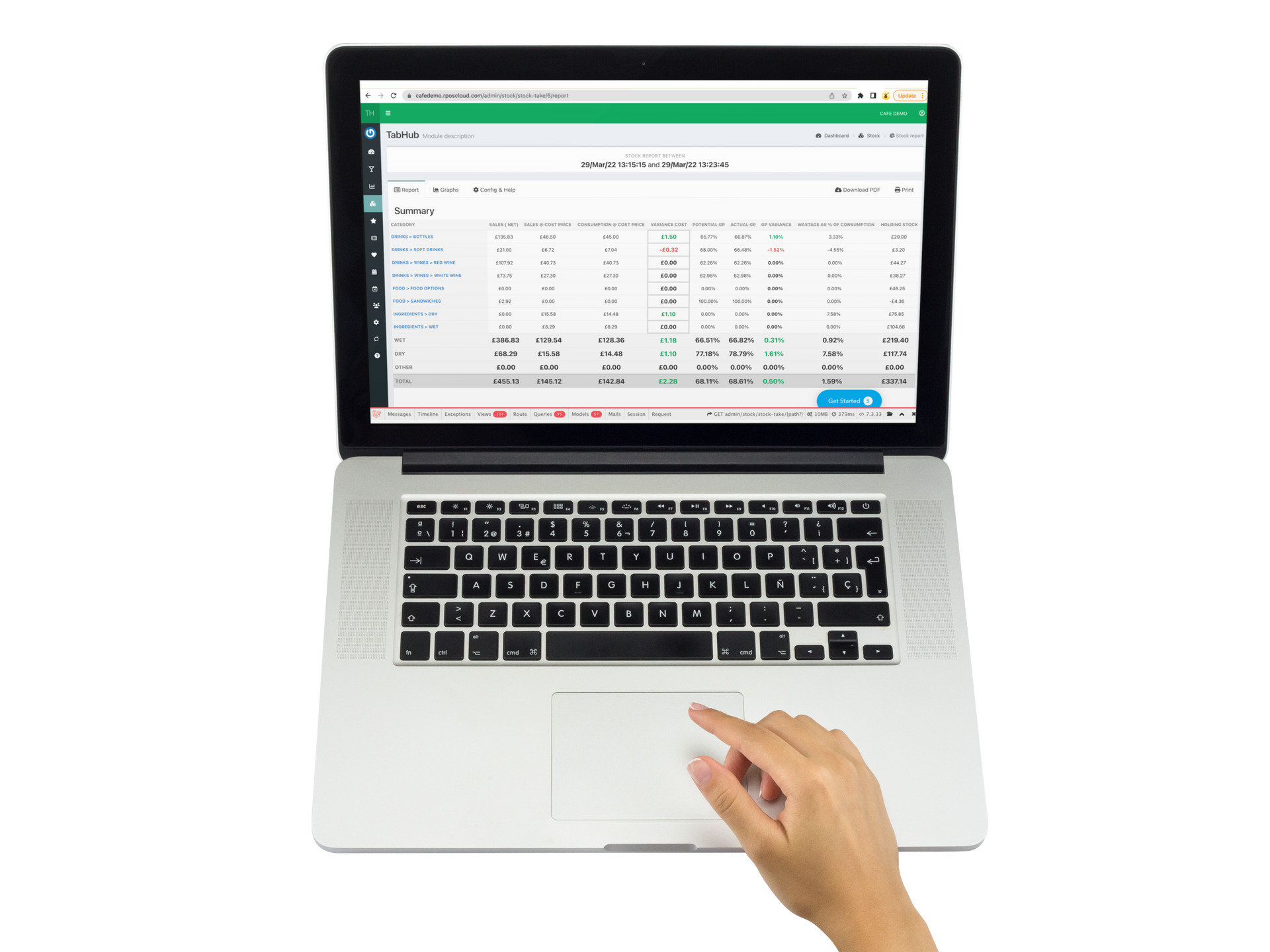
Data should work for you rather than overwhelming you with irrelevant details. Our system lets you configure which columns display in your stock report. If you only want to see the product and the amount of variance, that's fine – just hide the other columns. If you want to dig down into figures like costs and variance percentages, you can do that too. Set up the flow of information in a way that suits you.
How can you pinpoint and resolve stock variances faster?
When it comes to stock variances, two things are crucial. The first is correct setup. Products need to be assigned correct weights and volumes. When Shannon, one of our Customer Onboarding Experts, was General Manager of a large city-centre bar, she was very on the ball when it came to stock. "We discovered a £1,000 variance caused by the limes we used to garnish drinks. It hadn't been added to the system that a spirit and mixer included a wedge of lime. So we were buying them in but not registering when they were sold. So we weighed individual limes to understand how many grams each wedge weighed, and that gave us an average weight we could use to track them with every sale."
The second crucial element is time. The sooner you notice and investigate variances, the more likely it is that you’ll identify root causes and implement corrective measures.
Our system makes rapid response possible by including a Variances tab on every stock report. It extracts any lines with variances, and allows you to sort them however you like – by cost price, level of variance, percentage loss or gain. This means you can prioritise your investigation efforts where they'll have the biggest financial impact.
Communication is crucial in keeping on top of stock, particularly when multiple people are responsible for stock control tasks. Develop a consistent note-taking system for common variance patterns. These notes help you spot recurring issues quickly and stop you from re-investigating the same variance multiple times. Our stock reports include a notes section where you can easily highlight any key issues.
Standalone stock management software, or built into your EPOS?
Stock control isn't just for big chains. With the right approach and tools, every venue can reduce waste, save time, and boost profit – even with a small team.
There’s a range of inventory management tech available, varying in price, capabilities and usability. Some are standalone platforms, requiring an additional payment on top of your other crucial tech. But for many venues, complete integration with POS systems offers the simplest path – lower fees, fewer platforms to get to grips with, and faster insights – so you have more time to focus on delighting your customers.
Our system gives you all the tools and reporting & analytics capabilities you expect from a standalone stock management platform, built into a powerful, intuitive EPOS with furtherBackOffice systems, for a flat fee starting from £39/month (including one POS license).
Ready to reclaim hours per month, boost your GP and grow your business? Our experts can show you exactly how integrated stock control can benefit your venue with a free demo tailored to your needs.
Get in touch today.