Benefits of multi-site management
Many small multi-site businesses run a standalone EPOS system in each of their venues. Whilst this can work ok with a handful of venues, as businesses expand further, a system with multi-site management capabilities is likely to become essential.
Moving to a
multi-site set up also becomes more complicated as a business grows, particularly if there is no common link between products, such as a central ID or SKU.
With these things in mind it’s worth considering moving to a multi-site set up as soon as your business grows beyond the first venue.
In addition to setting your business up well for the future, this can also provide some immediate benefits. We look at some of these below.
Adding & updating products
If your venues have similar menus, or share some common stock items or ingredients, an EPOS system with a multi-site capability can dramatically reduce the time spent adding and updating products.
Instead of making changes across multiple sites, changes can be made in one place and pushed out across the group.
Particularly significant time savings can be made when suppliers change their prices, leading to cost prices needing to be updated across multiple products at the same time.
With our
hospitality EPOS, updating the price of an ingredient will also update the cost price of any items using that ingredient, so a single price edit can update the cost prices of multiple products across multiple venues.
Having centrally managed products can also lead to other benefits in improved combined reporting and tracking stock transfers.
Combined reporting
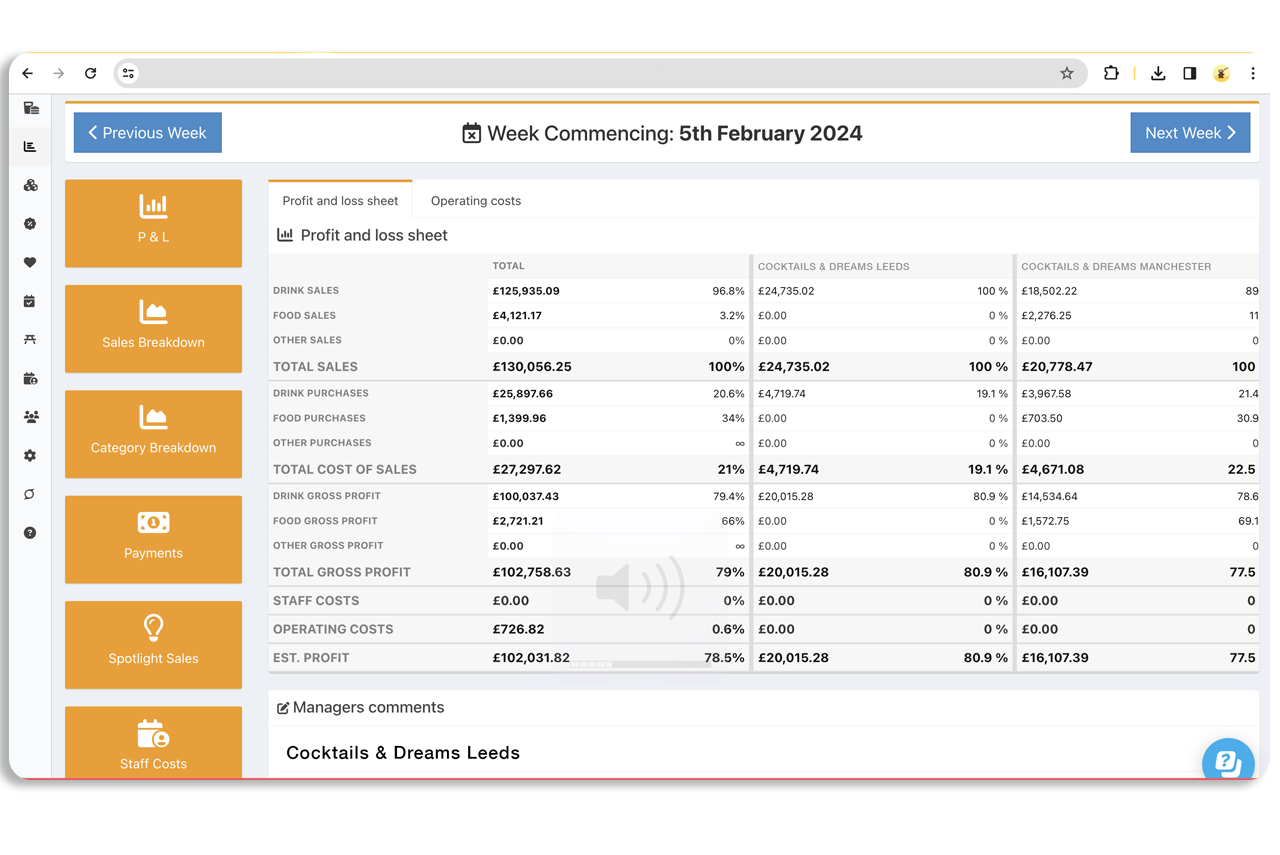
One of the biggest benefits of an EPOS with multi-site capabilities is being able to report on the business as a whole, instead of just on each individual venue.
With our hospitality EPOS you can view centralised realtime reports on the back office, and set up daily, weekly, and monthly email reports with figures for all venues.
If products are also centralised, it’s possible to view itemised sales data combined across all sites.
Stock transfers
Having a multi-site set up with common products across sites leads to the ability to place stock transfers between sites directly on the back office.
On our hospitality EPOS system, one site can request a transfer from another, in a similar way to placing an order with a supplier. The other site will see the transfer reflected on their own back office. Once the stock has been transferred the stock levels at both sites are automatically updated.
A centralised loyalty scheme
If you run a
loyalty scheme, a system with a central loyalty database will enable you to run one common scheme across all of your venues. You will also then have one database with all of your loyalty members for when you want to run group wide campaigns.
If you are interested in finding out how our hospitality EPOS with multi-site management can help transform your business, get in touch with our team of hospitality experts.