What to check before switching EPOS
“Time is as valuable as money in this business. You don’t want to spend all your time sorting things out off shift, or even in the middle of service.”
Switching EPOS is one of the biggest operational decisions a hospitality business can make. Get it right and you unlock real efficiency gains. Get it wrong and you could face disruption, hidden costs, and months of frustration while your team adapts to a system that doesn't fit how you work.
This guide covers the key things to check before any switch to a new EPOS system. In each section, we’ve also included some questions you can take into any conversation with a prospective provider to ensure you get the info you need to make an informed decision.
Your relationship with the EPOS provider
One of the most important yet commonly overlooked elements when considering EPOS providers (or any hospitality tech providers) is the vendor-customer relationship.
Central to this is the tech support. When you have an issue in the middle of peak service, there’s a huge difference between speaking to someone with no hospitality experience who’s reading from a script, and someone who has spent years in the industry and truly understands what you need. So make sure you find out about the depth of hospitality experience within providers' support teams.
Similarly, you need to be clear about how you’d communicate with support. Instant messaging is highly effective. You get rapid responses and can send screenshots and recordings to help them identify and resolve your problems faster. On the other hand, if it’s just phone and email support, this could mean long waits on hold while your issues are investigated. Check when the support is available. Ideally, they should be online when you’re open. But if it’s only weekdays and office hours, they might not be there when you need them.
Remember, a trial is not just a chance to try the software, but also to sample the relationship you would have with a potential new provider. Put the sales/onboarding team through their paces. See how effectively they respond to your queries and get a feel for how well they understand hospitality challenges and processes. If they offer ongoing training during the trial and beyond, as part of the package rather than charging you extra, it indicates a company that cares deeply about its relationship with you as a customer. It also makes the process of switching much less painful.
One operator who encountered operational challenges caused by inexperienced support teams is Phillip Deacon, owner of Gasoline American Diner in Chesterfield. He switched from Tabology to another EPOS provider. “We’d been with Tabology for quite a few years. The changeover was more about wanting POS and payments in a single package. On paper, the new system seemed to fit the bill.”
However, Phillip returned to Tabology. Problems arose that he hadn't anticipated. One of those was that the new support teams didn’t fully understand how hospitality works. “Support wasn't great at the new provider. For example, they asked for our product list so they could upload it to the system, but set it up in such a backwards way,” he says.
Another key part of the relationship is how well a vendor takes on your feedback and requests. Tech providers should be open to your suggestions for new features and improvements, because this ultimately benefits all of their customers. If a system doesn’t quite work the way you want it to, and you can see a better way that could save you time and effort, it can be frustrating. There should be clear and genuine pathways for you to log these requests so providers can act on them.
Questions to ask
- How much real hospitality experience do your support team have?
- How do we communicate with the support team?
- When is support available?
- What is the average response time and resolution time?
- How much ongoing training can I have? Is this included or a paid extra?
- How do I suggest new features and improvements?
- How do you act on customer requests?
The costs of switching
While some of the costs involved in switching EPOS are obvious (such as hardware purchases, monthly subscription fees, and setup & training costs), others are harder to gauge, and can vary depending on the circumstances.
Sometimes the headline price of any EPOS package doesn’t tell the full story. For example, it’s common for some providers to offer ‘free’ hardware worth thousands of pounds. But there’s no way of knowing the actual value. A further catch is that this hardware often comes with a commitment to a minimum subscription length, or a requirement to use proprietary payment processing.
If you are required to use proprietary payment solutions, you won’t be able to shop around for the best rates. Your increase in payment processing fees might even exceed the value of the hardware you were given.
Some EPOS providers
integrate with multiple payment partners
and offer you the choice, allowing you to access better rates. They might also allow you to use any non-integrated provider (you can learn more about the
difference between integrated and non-integrated payments here). Ideally, you should be able to switch payment providers without penalty, so you’re never trapped into uncompetitive rates.
Some providers require you to use their proprietary hardware such as tablets, printers and terminals. This can lead to problems if you want to change systems later down the line. You can be left with equipment that’s incompatible with any other systems and therefore useless. Or you might not actually own the equipment, and you’d have to send it back (possibly at your own expense).
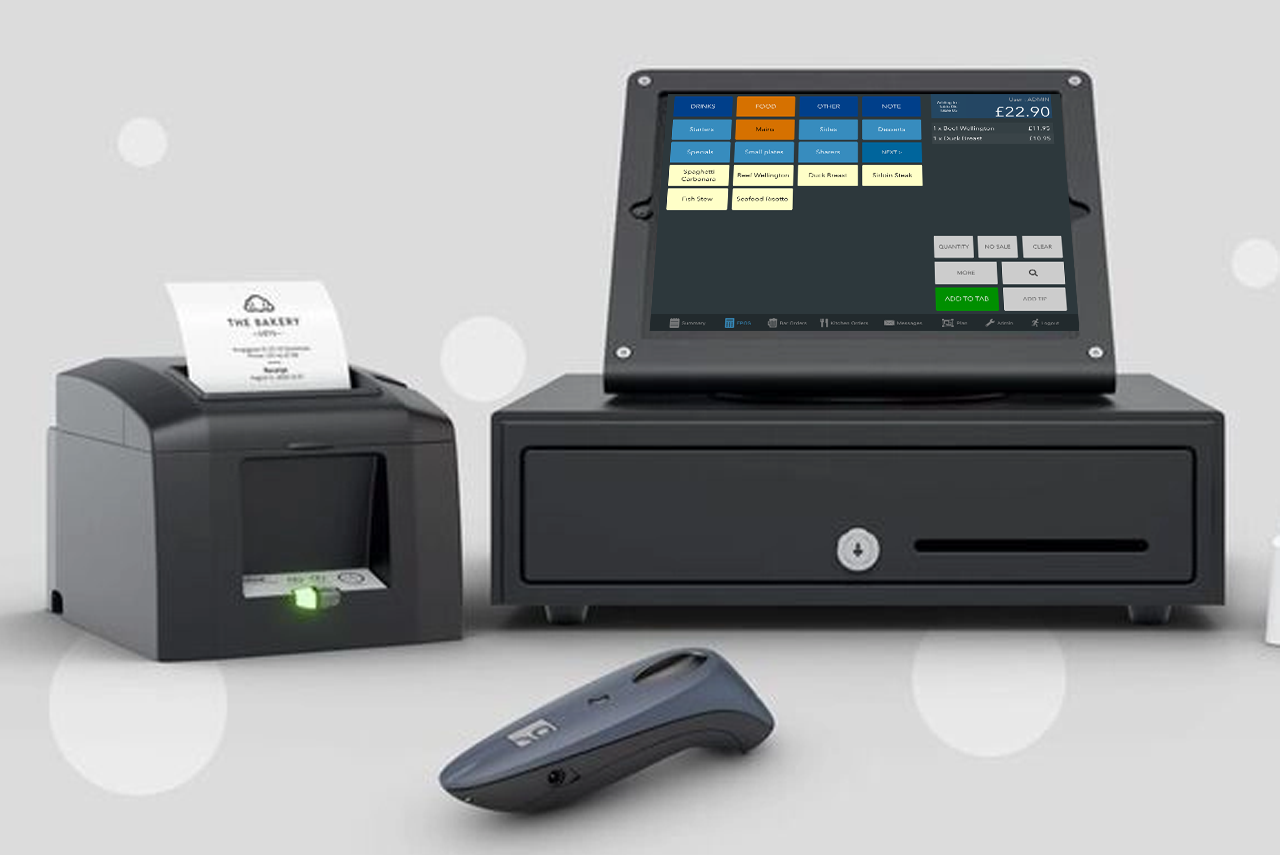
Other providers such as ourselves use off-the-shelf tablets and printers. This gives you, as the customer, ownership, control and flexibility. Should you ever change EPOS provider, you might be able to continue using your hardware with the new system. But if not, at least you can sell it on and recoup some of your initial outlay. Refurbished devices can significantly reduce the initial costs. So it's worth asking providers whether they can help you source affordable options rather than pushing you toward new hardware at full price.
Questions to ask
- What hidden costs are there outside the headline rates?
- Common ones include setup & training fees, ‘free’ hardware that comes with tie-ins, payment processing fees, and features and support that are only available as paid add-ons
- Will I need to source new hardware? If so, are there affordable ways to do this?
- Is the hardware compatible and useful beyond just your system?
- Do I have a choice of payment providers?
- Can I switch payment providers easily if rates change?
The new system’s features
Operators can run into problems following a switch if they don’t fully understand a new system’s capabilities, strengths and shortcomings.
Don’t assume that the features you have in your current EPOS will be included with others. Some systems don’t include modules such as stock management and loyalty, so would require a subscription to a separate platform.
To start with, take stock of your current tech setup and what you really rely on. What would you miss if it were gone? Draw up a list of non-negotiable tools and features you’d need from any new EPOS.
Sometimes it’s the little things that can cause the biggest headaches. Phillip says,
“Things like how to
set up products and tailor things to your bar were very difficult. For example, you couldn’t add options. We do loaded fries, but to add toppings like salt or chilli sauce, you had to create them as separate products, and it just didn’t work very well.”
Be aware of any 3rd-party integrations that are currently integral to your setup. A new EPOS might not integrate with those platforms, so you’d need to look at switching those as well.

Also be aware that not all integrations are created equal. The issue with integrations is often not with the platforms themselves, but with how they interact, so issues are not always obvious. For example, two different EPOS systems might integrate with accounting software like Xero. But the way it posts reports might differ between the two EPOS systems; one might require more manual workarounds.
It’s also worth looking at the wider features a system offers, which you might not need now but could do in the future. We often have customers who sign up with a handful of certain features in mind, but soon begin exploring other features they hadn’t initially considered because it’s right there, built in and ready to use. Tabology customer
Mark Martin at The Unicorn Inn says,
“We’re planning to expand our use of
loyalty and promotions. It’s very reassuring to know that everything is there, already provided whenever we need it, and I don’t have to go through the hassle of researching and trying other providers.”
The best way to understand exactly whether a new POS system meets your key requirements is with a free trial. Providers that have confidence in their product should let you try it for free. Test-drive the software and see how well it performs the specific tasks you need.
Questions to ask
- What are the non-negotiable tools and features I need?
- Are these included in the new EPOS?
- What 3rd-party integrations do we rely on?
- Does the new EPOS integrate with these 3rd-party platforms?
- Are those integrations as reliable and effective as they are with my current EPOS?
- What additional features does it offer that I may need later down the line?
- Can I try the system for free?
How your EPOS affects day-to-day running
The hardest part to clarify when switching EPOS involves peering farthest into the future – how will a new EPOS affect the day-to-day running of your venue, once everything has settled down and staff are used to it?
Identify two or three key areas or processes where you spend the most time and energy, and where you feel you have the most potential for greater efficiency. This might be something customer-facing such as how you manage upselling, or a back-of-house operation like stock management or staff scheduling. Map out how you currently manage those processes, and compare them to how they would look with a new system. A good sales/onboarding team should have the experience to understand the subtleties of your daily tasks and help you see where the tech fits in.
Get a feel for this during the trial period. Get your staff using the front end, and make sure the system can maintain speed of service. Try out the admin functions you use regularly, such as adding products and viewing reports. Will the new system save you time or cost you time?
This will give you a sense of how service might feel for both staff and customers.
The best hospitality tech ‘stays out of the way’. The less that staff have to think about navigating an interface, the more they can focus on looking after the customers.
Phillip noticed the difference after returning to Tabology.
“Time is as valuable as money in this business. You don’t want to spend all your time sorting things out off shift, or even in the middle of service. The other provider didn’t have anywhere near the simplicity of Tabology. You had to do things the way the software tells you, not how you need it. Ultimately, it made it very complicated.”
Questions to ask
- What are some key processes that we carry out most days? Does the new system make them easier or harder?
- How easily can our staff get to grips with the front-end system? Can they maintain speed of service?
- How well will the tech ‘stay out of the way’ and free us up to focus on hospitality?
The straight answer
Switching your EPOS can have a real impact on your business, from your costs and profitability, to your day-to-day running and training. The best way to make sure the impact is positive is to look beyond the headline pitch: test the software, probe the support, map out your key processes, and understand the full picture before you commit.
Phillip's experience is a reminder that what looks right on paper doesn't always translate in practice, and he ended up returning to our system. "With Tabology EPOS, things were much faster and simpler. So we got in touch with Tabology, who helped us sort out our payment solutions and restored the system."
We're glad to be working with Phillip once again. Experiences like his are learning opportunities for us, too, and have helped us shape and expand what we offer our customers.
If you're weighing up a switch and want to understand what Tabology offers, our friendly experts can help. They have decades of experience in hospitality management, so they can help you properly understand how the system fits in with how you work, and give you honest feedback on whether we’d be right for your needs.
Book a demo with them and get the answers you need.